

Introduction
One of the most important decisions in any poker tournament is how the prize pool will be distributed. A clear and fair payout structure keeps players motivated, prevents confusion, and ensures the tournament ends on a positive note.
Whether you're hosting a home game, running a poker league, or organizing larger tournaments, understanding how payouts work will help you create a better experience for everyone involved.
In this guide, we’ll walk through common poker payout structures, how to calculate prize pools, and how to choose a payout style that fits your tournament.
Understanding the Prize Pool
The prize pool in a poker tournament is usually created from player buy-ins. For example, if 20 players enter a $20 tournament, the total prize pool would be $400.
Some tournaments also include optional rebuys or add-ons, which increase the total prize pool as the event progresses.
Before the tournament begins, it's important to clearly communicate how many finishing positions will be paid and how the prize pool will be distributed.
Percentage-Based Payouts
Most poker tournaments use a percentage-based payout structure. Instead of assigning fixed dollar amounts ahead of time, the prize pool is divided according to percentages.
This method automatically adjusts payouts based on the number of players and the size of the prize pool.
For example, a typical three-player payout structure might look like:
- 1st place: 50%
- 2nd place: 30%
- 3rd place: 20%
If the prize pool is $500, that would result in:
- 1st place: $250
- 2nd place: $150
- 3rd place: $100
This approach keeps payouts proportional and easy to calculate.
How Many Players Should Get Paid?
Another important decision is how many finishing positions will receive payouts.
Most poker tournaments pay around 10% to 20% of the field. This ensures that reaching the money still feels like an accomplishment.
Here are some common payout guidelines:
- 6–10 players: pay top 2 spots
- 11–20 players: pay top 3 spots
- 21–40 players: pay top 4–5 spots
- 50+ players: pay top 6–8 spots
Paying too many players can make the payouts feel insignificant, while paying too few can make the tournament feel overly harsh.
Flat vs Top-Heavy Payout Structures
Poker tournaments generally fall into two payout styles: flat structures and top-heavy structures.
Flat Payouts
Flat payout structures distribute the prize pool more evenly among players who finish in the money.
For example:
- 1st place: 35%
- 2nd place: 25%
- 3rd place: 20%
- 4th place: 12%
- 5th place: 8%
Flat structures are popular in casual leagues and home games because they reward consistent performance and allow more players to leave with winnings.
Top-Heavy Payouts
Top-heavy structures concentrate a larger portion of the prize pool at the top.
For example:
- 1st place: 55%
- 2nd place: 30%
- 3rd place: 15%
These structures create higher stakes for the final table and reward tournament winners more significantly.
Top-heavy payouts are common in competitive tournaments where winning the event is the primary goal.
Using a Poker Payout Calculator
As tournaments grow larger, calculating payouts manually becomes more complicated. Hosts often need to quickly determine how to divide the prize pool based on the number of players and the chosen payout structure.
Poker payout calculators simplify this process by automatically generating fair distributions based on the total prize pool and number of paid positions.
These tools help ensure that payouts remain consistent and transparent for players.
Managing Payouts in Poker Leagues
In poker leagues, payouts often work alongside season-long point systems. Instead of awarding the entire prize pool at each event, leagues may accumulate funds across multiple tournaments and award larger prizes at the end of the season.
This approach encourages players to attend consistently and compete for long-term standings rather than focusing only on a single tournament.
Managing both event payouts and league standings can become complicated, which is why many hosts use tournament management platforms to track results and prize pools automatically.
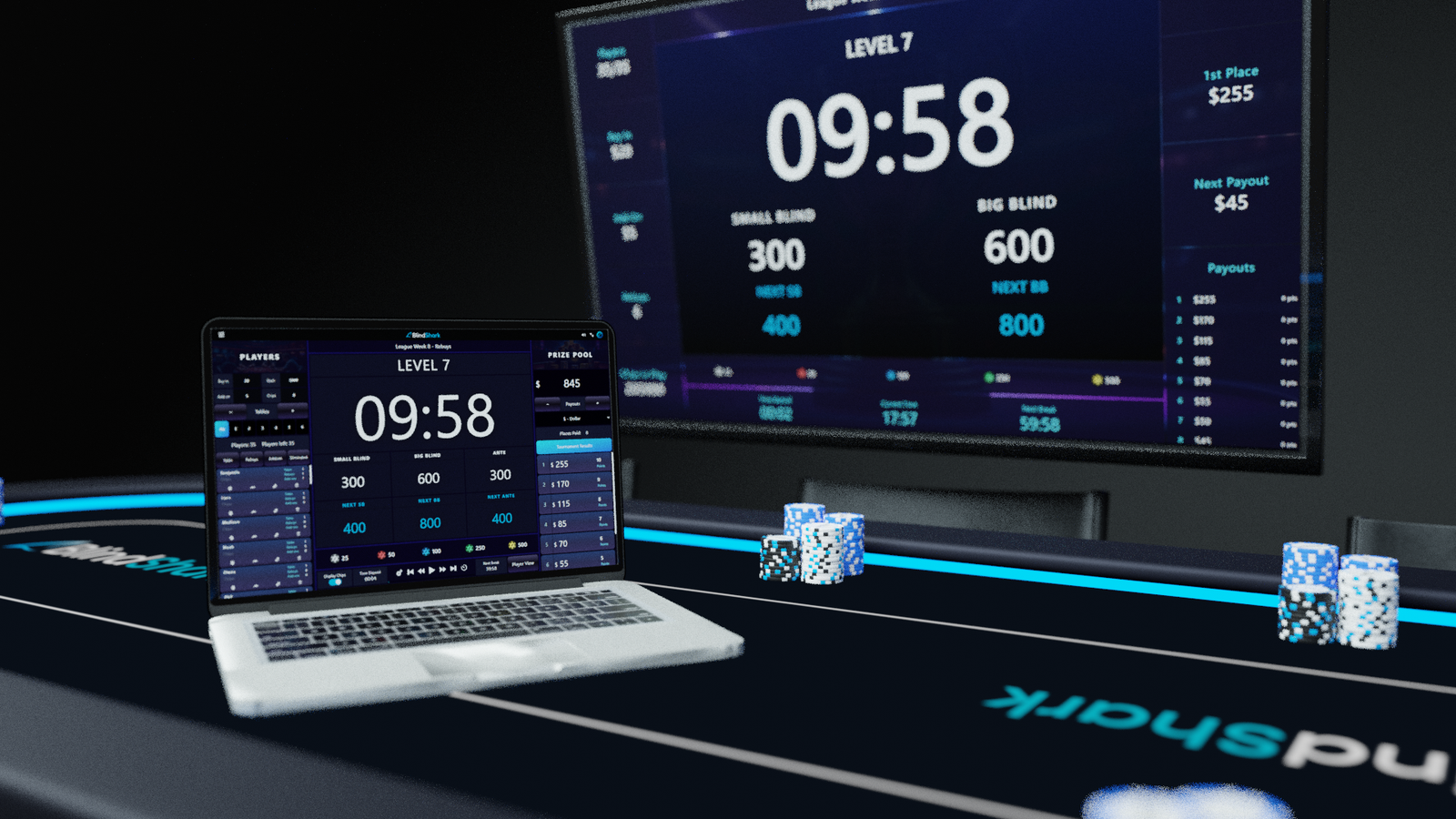
Platforms like BlindShark help hosts organize tournaments, track player results, and maintain league standings without relying on manual spreadsheets.
Final Thoughts
A well-designed payout structure plays a major role in how players experience a poker tournament. Clear rules, fair prize distribution, and transparent calculations help build trust and keep players coming back.
By understanding common payout models and using tools that simplify calculations, hosts can run tournaments that feel organized, competitive, and rewarding for everyone involved.