

Introduction
A well-designed blind structure is one of the most important parts of any poker tournament. The pace of the blinds determines how long the tournament lasts, how much strategy players can use, and how exciting the game feels overall.
If blinds increase too slowly, the tournament can drag on for hours. If they increase too quickly, players are forced into all-in situations before they have a chance to play real poker.
Finding the right balance is the key to running successful tournaments, whether you're hosting a home game, managing a poker league, or organizing multi-table events.
Understanding Blind Progression
Blind progression refers to how the small blind and big blind increase throughout the tournament. A good structure raises the blinds gradually so that the early stages allow players to build stacks and play strategically.
As the tournament continues, the blinds increase faster to encourage action and eventually bring the game to a conclusion.
Most poker tournaments follow a pattern where blinds roughly double every few levels. For example:
- 25 / 50
- 50 / 100
- 75 / 150
- 100 / 200
- 150 / 300
- 200 / 400
This steady progression prevents dramatic jumps that can suddenly force players into desperate situations.
Choosing the Right Level Length
Blind level duration has a huge impact on the feel of the tournament.
Short levels create fast-paced action, while longer levels give players more room to play deep-stacked poker.
Common blind level lengths include:
- 10 minutes – fast-paced home games
- 12–15 minutes – balanced recreational tournaments
- 20 minutes or more – deeper strategy-focused events
For most home tournaments and poker leagues, blind levels between 12 and 15 minutes provide a great balance between strategy and pace.
Using a dedicated poker tournament clock helps maintain consistent level timing and ensures every table progresses through blinds at the same pace.
Turbo vs Standard Blind Structures
Not every poker tournament is designed to last the same amount of time. That’s why many hosts choose between standard and turbo structures depending on their event goals.
Standard Structures
Standard tournaments use longer blind levels and smaller increases. This allows players to make more strategic decisions and rewards skill over short-term luck.
These structures are ideal for:
- Poker leagues
- Competitive home tournaments
- Events where players expect deeper gameplay
Turbo Structures
Turbo tournaments use faster blind increases and shorter levels. This creates quicker finishes and more aggressive play.
Turbo structures are popular for:
- Casual home games
- Late-night tournaments
- Events with limited time
While turbos are exciting, they reduce the strategic depth of the game, so they are usually best reserved for shorter or more casual events.
Starting Stacks and Their Impact
Blind structures should always be designed alongside starting stacks. The ratio between starting chips and initial blinds determines how deep players begin the tournament.
For example:
- A 10,000 chip stack with 25/50 blinds starts with 200 big blinds
- A 20,000 chip stack with 100/200 blinds starts with 100 big blinds
Most well-balanced tournaments start players between 100 and 200 big blinds. This allows enough room for early strategy while still letting the tournament progress naturally.
Planning the Length of Your Tournament
Blind structures should be designed around the total time you want the tournament to last.
For example:
- 2–3 hours: turbo structure
- 3–4 hours: balanced standard structure
- 4–6 hours: deeper competitive structure
Planning this in advance helps avoid situations where the tournament runs far longer than expected.
Many hosts design their blind structures so the tournament reaches the final table around the halfway point of the scheduled time.
Using Tournament Clock Software
Managing blind levels manually can become difficult, especially during larger events or poker leagues with multiple tables.
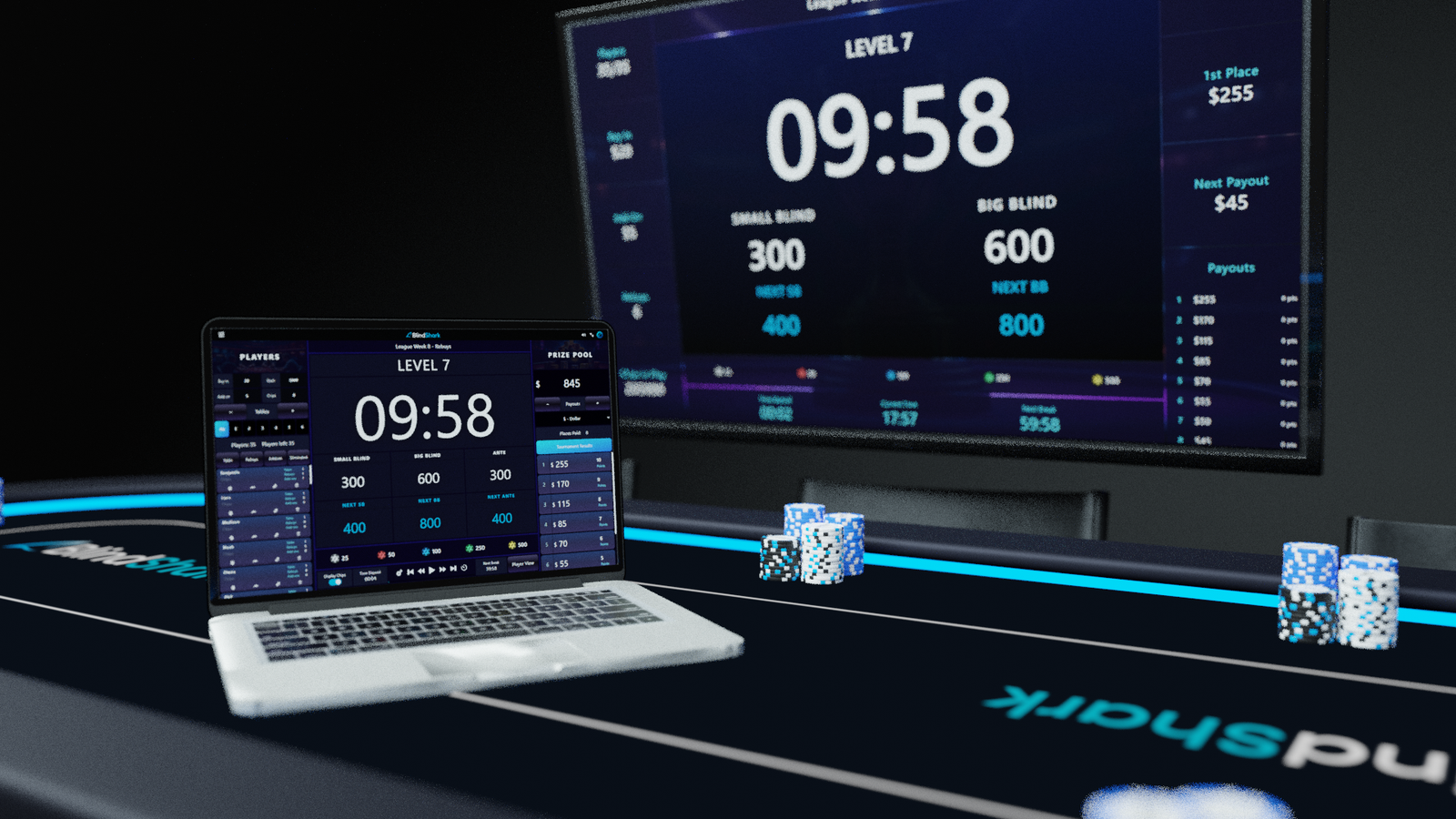
Poker tournament clock software simplifies this process by automatically counting down levels, displaying current blinds, and alerting players when increases occur.
Platforms like BlindShark allow hosts to run professional tournament clocks while also managing events, tracking players, and organizing league standings in one place.
Instead of constantly announcing blind changes or checking timers, hosts can focus on running the game while the system handles the structure.
Final Thoughts
A great poker tournament starts with a well-designed blind structure. The right progression keeps players engaged, creates strategic gameplay, and ensures the tournament finishes at a reasonable time.
By balancing blind increases, level lengths, and starting stacks, you can create tournaments that feel exciting and well organized for everyone at the table.
And as your events grow larger or more frequent, using a dedicated tournament clock can make managing those structures far easier.